
The Multi-Agentic Travel Planner is a collaborative AI travel-planning system that uses specialized agents to create personalized trip itineraries.
Each agent handles a specific part of the planning process, such as gathering requirements, finding flights, recommending accommodation, planning activities, building the itinerary, and reviewing the final output.
At the core of the project is a custom agent framework built from scratch, designed to support reusable and extensible agent development. This framework allows each agent to operate with its own brain, memory, tools, and properties, making the system modular and adaptable for other multi-agent applications beyond travel planning.
A demonstration of the Multi-Agentic Travel Planner in action
Multi-Agent Architecture
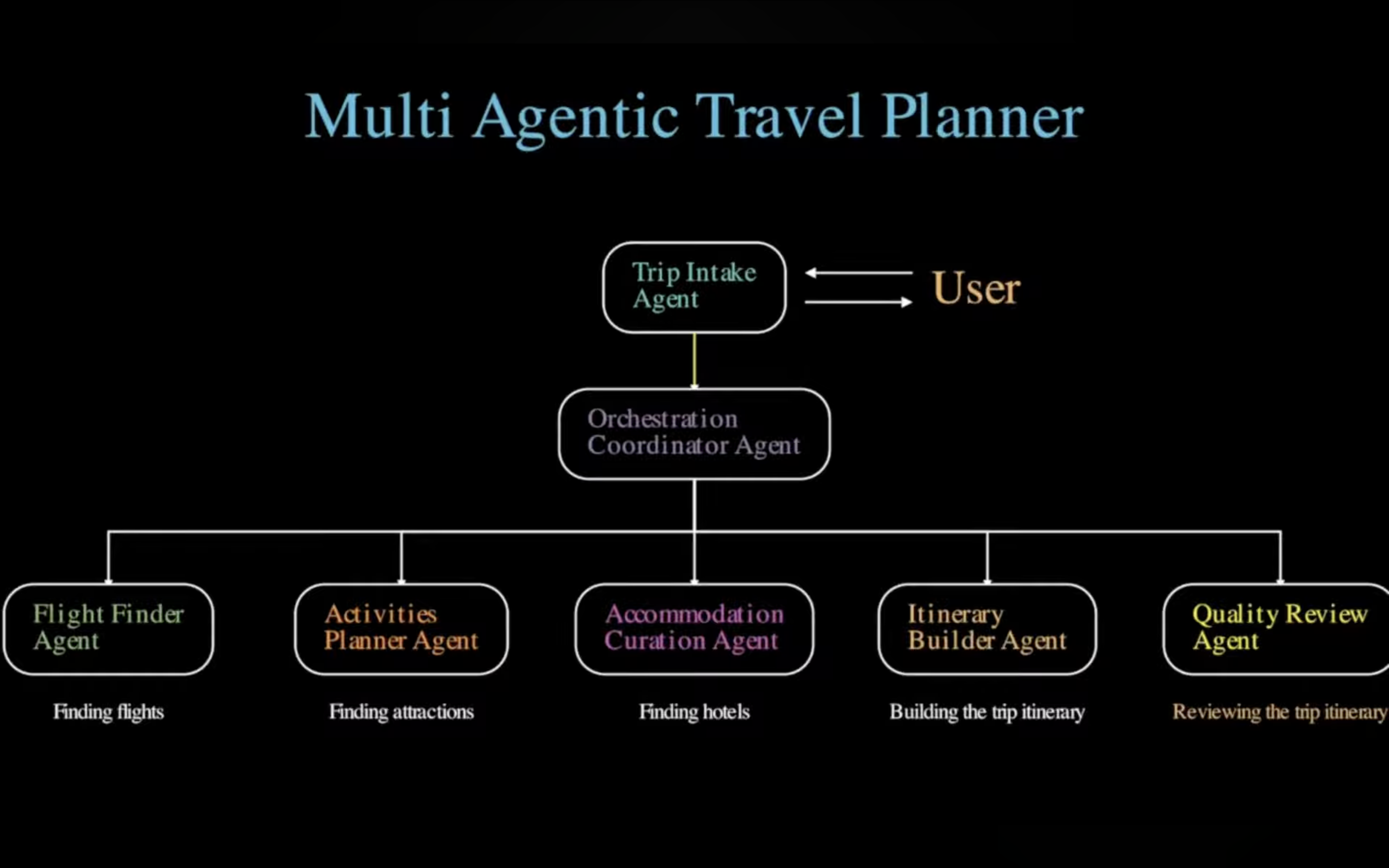
System architecture showing how specialized agents collaborate
The system is made up of the following specialized agents:
- TripIntakeAgent - Collects essential trip details such as destination, budget, duration, and preferences from the user, then confirms the information.
- TripOrchestrationAgent - Orchestrates the workflow, delegates tasks in sequence, and tracks progress across agents.
- FlightFinderAgent - Searches for and recommends flights matching the user's travel dates and budget.
- ActivitiesPlannerAgent - Recommends attractions and activities tailored to the user's interests and trip duration.
- AccommodationCurationAgent - Finds and recommends 2 to 4 hotel options within budget with pricing, ratings, and locations.
- ItineraryBuilderAgent - Combines flights, accommodations, and activities into a detailed day-by-day itinerary with a cost breakdown.
- QualityReviewAgent - Performs final quality checks on the itinerary for accuracy and consistency.
Custom Agent Framework
A major part of this project was building a custom agent framework from scratch. Each agent is created using four main components:
- Brain - Handles the agent's reasoning and decision-making.
- Memory - Stores and retrieves context needed by the agent.
- Tools - Give the agent access to specific functions, APIs, or external services.
- Properties - Define the agent's role, goal, system prompt, and behavior within the workflow.
Each agent has its own instance of a brain and memory object, allowing agents to reason independently while still working together as part of the larger planning workflow.
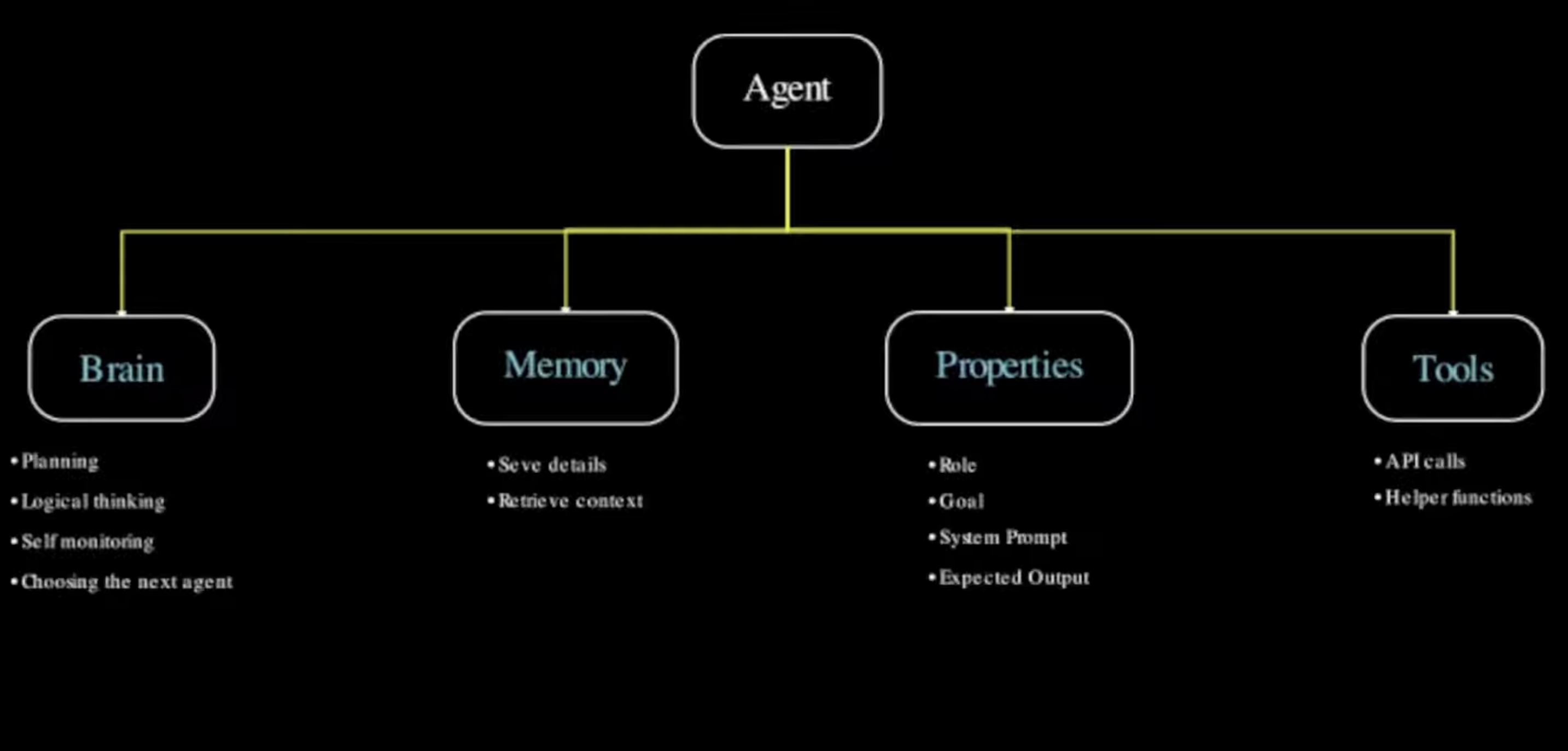
How each agent is constructed using brain and memory components
Brain Capabilities
The brain acts as the cognitive layer of the agent. It is responsible for:
- Deciding whether the agent should respond
- Generating the agent's response
- Deciding the next agent in the workflow
- Evaluating its own response
Memory Capabilities
The memory acts as the contextual layer of the agent. It is responsible for:
- Storing important information
- Retrieving relevant context when needed
- Helping the agent make decisions based on previous inputs and outputs
Key Features
- Multi-agent collaboration for end-to-end trip planning
- Custom tools and API integrations
- Independent memory and reasoning for each agent
- Dynamic itinerary generation by domain-expert agents
- Quality-checking agent to validate and refine all outputs